
Stakeholder Mapping Consultant TOR
July 15, 2026
UNDP GEF IncoMaputo Project at the Eighth Global Environment Facility (GEF) Assembly in Samarkand, Uzbekistan
July 23, 2026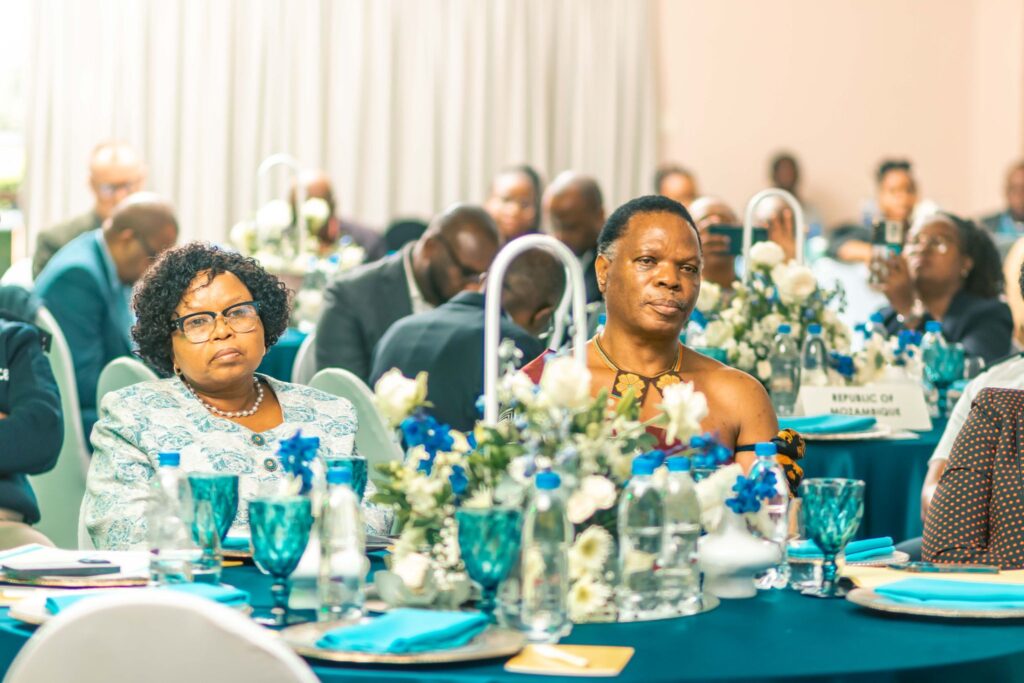
The Governments of the Kingdom of Eswatini, the Republic of Mozambique and the Republic of South Africa on 28 May 2026 officially launched the implementation of the UNDP-GEF Project “Strengthening Integrated Transboundary Management of the Incomati and Maputo River Basins,” an initiative that is advancing integrated source‑to‑sea management of the Incomati and Maputo River Basins which are shared by the three countries. The launch event took place at the Royal Villas in Eswatini.
Funded by the Global Environmental Facility (GEF), the project, also referred to as the GEF-8 IncoMaputo Project, is being implemented through the Incomati and Maputo Watercourse Commission (INMACOM), an organization formed by the three governments to promote cooperation and ensure coordinated development, management and sustainable use of the water resource.
The project seeks to ensure environmental security, build resilience, and inclusive livelihoods through five strategic components:
Strengthening governance frameworks for transboundary basin management.
Facilitating some knowledge‑based approach to source‑to‑sea management.
Supporting basin‑wide and coastal zone strategic planning and investment mobilisation.
Creating sustainable livelihoods by enhancing water, food, energy, and environmental security.
Knowledge generation, communication, and dissemination to scale lessons and impact.
Officially launching the project, Eswatini Minister of Tourism and Environmental Affairs, Ms. Jane Mkhonta-Simelane said with a GEF investment of USD 7.1 million leveraging over USD 64 million in co-financing from member states and partners, the partnership demonstrates the catalytic power of the GEF project in bringing together governments, institutions, and communities to deliver lasting impact at scale.
“One of the most critical strengths of this project is its recognition of the deep interconnections between water, biodiversity, and human wellbeing. At the heart of this initiative lies the Lubombo Transfrontier Conservation Area (TFCA), a globally significant ecological landscape that links protected areas, wildlife corridors, and coastal ecosystems across Eswatini, Mozambique, and South Africa.
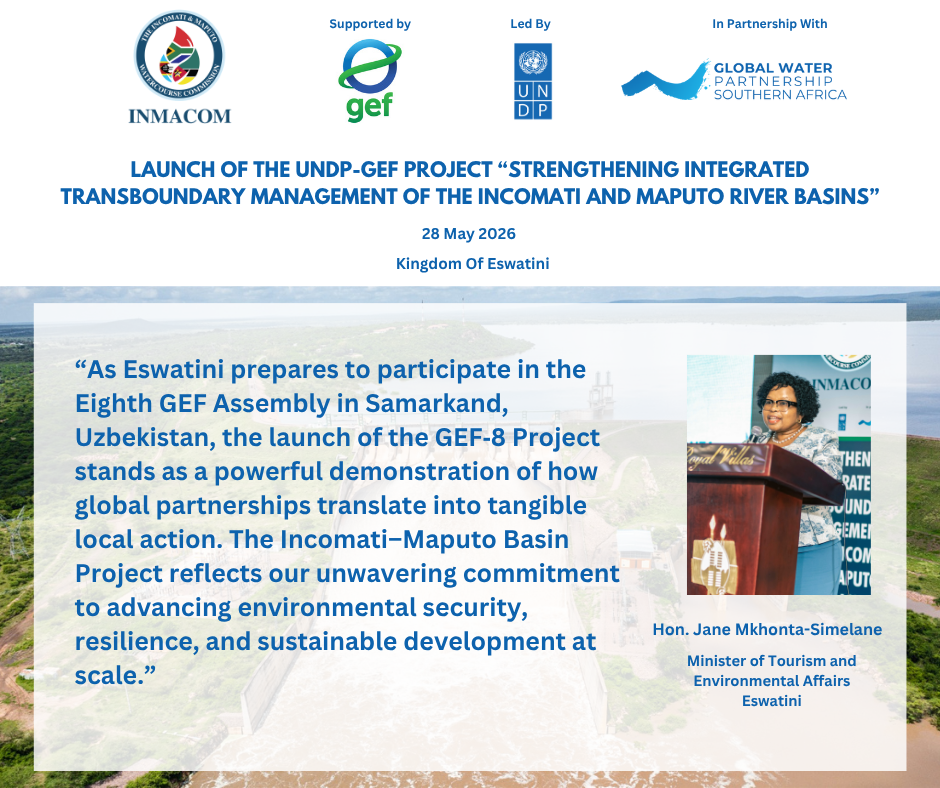
She reaffirmed that, in her capacity as the Kingdom of Eswatini’s GEF Focal Point, there is an unwavering commitment to ensuring that this initiative delivers tangible benefits for communities, secures long‑term sustainability for ecosystems, and makes meaningful contributions to global environmental goals.
The Minister of Natural Resources in the kingdom of Eswatini, Prince Lonkhokhela said GEF-8 funding cycle was established with one clear, urgent mandate: to tackle the triple planetary crisis of climate change, biodiversity loss, and pollution before negative trajectories get irreversibly locked in.
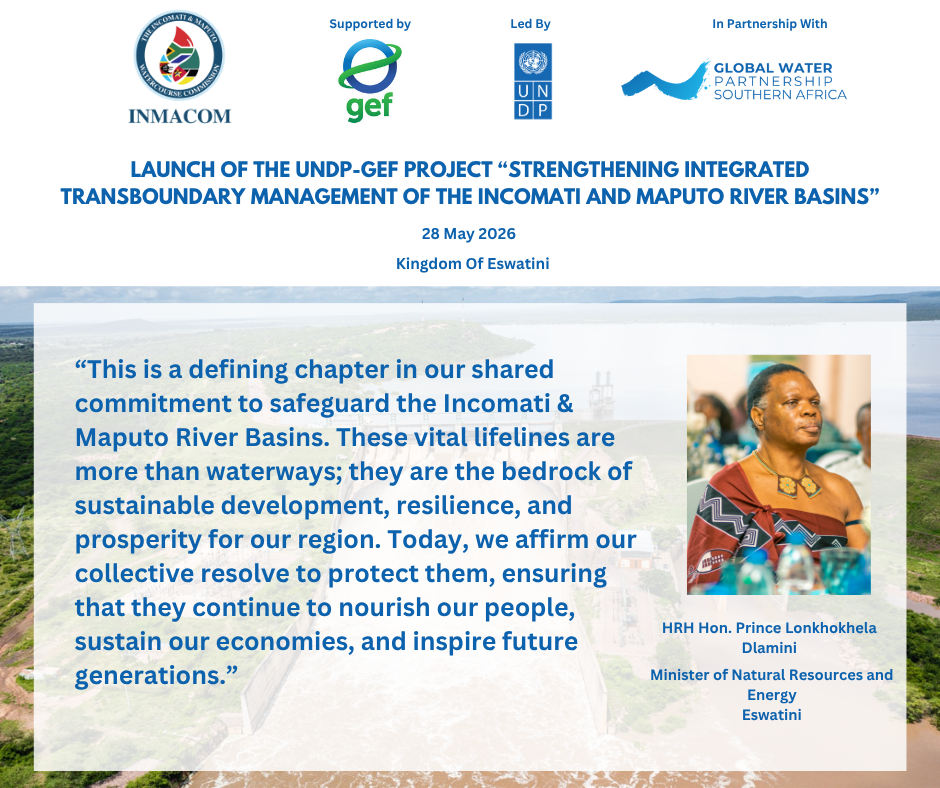
“Our world requires systems change rather than isolated interventions, that is why Strengthening Integrated Transboundary Management of the Incomati and Maputo River Basins is designed, not in a vacuum, but as an integrated approach. We are here to align economic development with environmental stewardship, recognising that humans and a healthy biosphere are interdependent.”
He also added that the project was a strategic initiative designed to implement an innovative “source-to-sea” water management approach. Executed collaboratively by the United Nations Development Programme (UNDP), the Global Water Partnership Southern Africa (GWPSA), and the Incomati and Maputo Watercourse Commission (INMACOM), the project will address extreme climate vulnerability, water allocation tensions, and ecosystem degradation across the Kingdom of Eswatini, the Republic of South Africa, and the Republic of Mozambique.
UNDP Eswatini Resident Representative Henrik Franklin emphasized that the launch was more than the start of another regional initiative it was a reaffirmation of a shared vision. He said the project symbolises solidarity and collective stewardship, positioning the Incomati and Maputo River Basins as a model for transboundary cooperation in Southern Africa. He stated that UNDP was proud to support the initiative as the GEF implementing partner, working alongside the INMACOM Commission, the Governments of Eswatini, Mozambique and South Africa, the Global Water Partnership Southern Africa, communities, technical institutions and many other partners. He noted that across Southern Africa, climate change was no longer a future threat. It was already reshaping economies, infrastructure systems, agricultural productivity and patterns of human vulnerability.
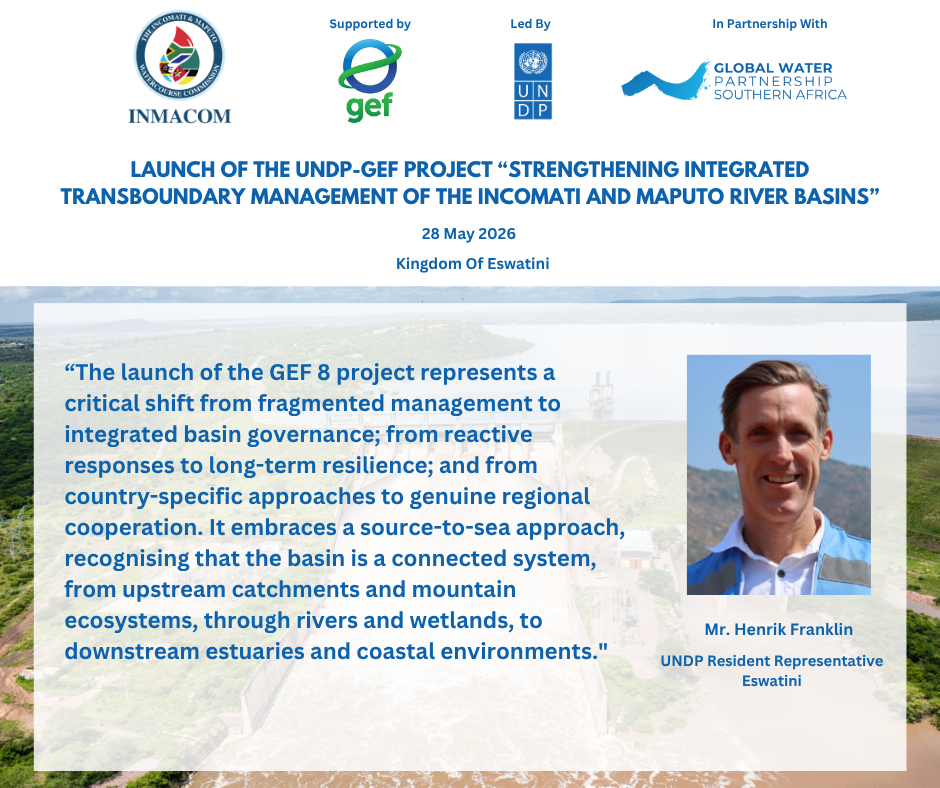
“The Incomati and Maputo basin is one of the most strategically important transboundary water systems in Southern Africa. It sustains millions of people across South Africa, Mozambique, and Eswatini. It underpins agriculture, energy generation, biodiversity, tourism, industry and livelihoods. It is central to food security, economic stability and climate resilience across the region. Yet today, the basin faces mounting pressures,” said Franklin.
Delivering his remarks during the launch, Executive Secretary of the Global Water Partnership Southern Africa (GWPSA), Mr. Andrew Takawira said the launch was a proud moment for the region. “We celebrate cooperation at work, we celebrate regional integration, and we celebrate the growing confidence of Southern Africa in managing its shared future together.”
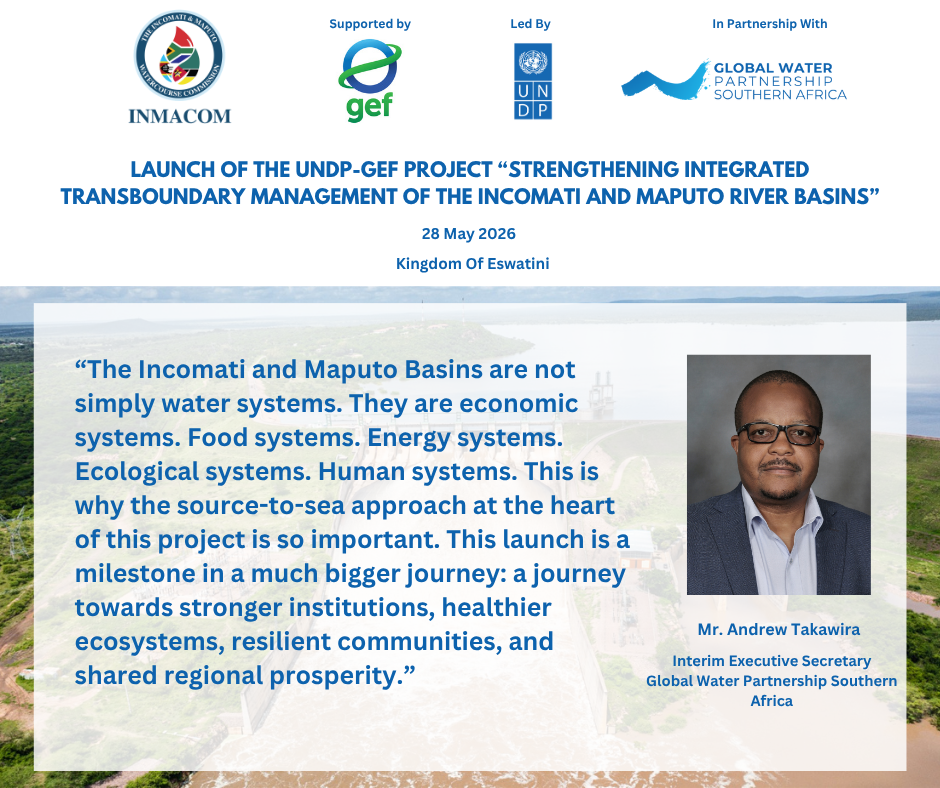
He added that at a time of declining concessional resources and increasing demands it was important to pool efforts, align priorities and use regional platforms to advance collective agendas that individual countries cannot achieve alone.


