
Implementation of the project, “Strengthening Integrated Transboundary Management of the Incomati and Maputo River Basins.”
August 7, 2026
Terms of reference for Professional consultancy services for the determination of environmental Flows (E-Flows) in the Incomati and Maputo Watercourses
August 19, 2026
12 August marks International Youth Day (IYD), an annual observance established by the United Nations General Assembly in 1999 to recognize the valuable contributions of young people and raise awareness of the challenges and opportunities they encounter.
In commemoration of this important day, our Regional Gender and Safeguards Officer, Gcinile Ndzinisa, has authored a blog highlighting the progress, achievements, and ongoing activities being implemented under the INMACOM GEF-8 Project. Through her reflections, she shares insights into the project’s impact and its contribution to empowering communities and advancing sustainable development.
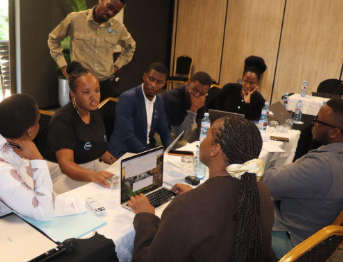
For two gruelling weeks, 14 young water professionals from Eswatini, South Africa, and the Netherlands lived inside an intellectual pressure cooker, the inaugural Wetskills Challenge Eswatini. Problems on the table, a blur of fast-moving ideas, sharp critiques from seasoned experts, and the relentless ticking of a clock. Then came the moment of truth.
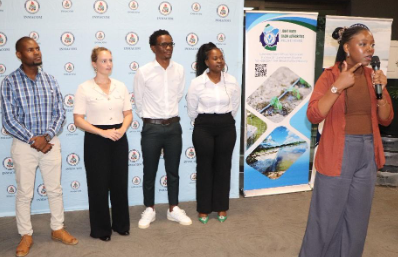
Nomagugu Ndabangaye stood before a formidable panel of judges, international diplomats, and the Incomati and Maputo Water Commission (INMACOM) commissioners. Officially, she was just an intern from South Africa’s Department of Water and Sanitation. But as she took the microphone, the hierarchy dissolved. She became the voice and the hope of her team and to young women in the room.
When she spoke, the room fell into an unusual, heavy silence. Her teammates held their breath; the judges leaned in. When she finished, the room erupted into a deafening applause. The real triumph wasn’t just her team’s solution, it was the profound statement she had just made. Young people were no longer asking for the answers; they were proving what happens when they are finally trusted with the questions.
This is the exact energy driving the International Youth Day: “Different Contexts, Common Aspirations.” The theme acknowledges a simple truth: though young people live in vastly different realities, they share an unyielding desire for dignity, opportunity, and a sustainable future.
Across the Incomati and Maputo river basins, those different realities are impossible to ignore. Rivers do not recognize geopolitical borders, even if institutions do. A decision made upstream shapes an ecosystem downstream. A river, after all, does not ask for a passport.
Yet, for decades, the rooms where these transboundary water decisions are made have been devoid of youth.
Changing that reality requires more than just offering young people a seat at the table; it means giving them something meaningful to say. For Zanele Lulane of Eswatini and Cesaria Huo of Mozambique, attending the Southern African Development Community (SADC) regional youth consultations on the development of a Youth Engagement Strategy for Transboundary Water Management wasn’t about collecting a participation badge.
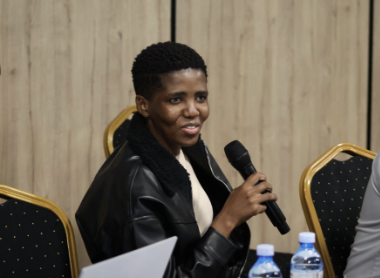
They were there to build a permanent, institutional highway for youth voices to influence regional water treaties.
They were swimming in deep political waters, navigating complex regional strategic plans and groundwater programs. Yet, they refused to be passive observers. They anchored themselves as architects of the region’s future.
The momentum didn’t stop in high-level conference rooms. Zanele took the insights from the regional stage and carried them straight back to her local communities through the Eswatini Youth in Water (EYIW) network’s workshop on the co-development of EYIW Strategic Roadmap for 2026–2030. The conversation quickly shifted from “How do we participate nationally?” to “How do we ensure that local youth priorities align with the SADC water strategic directions, while also unifying voices across Eswatini, Mozambique, and South Africa”.
But water governance cannot live entirely in air-conditioned summits. It must get its hands dirty.
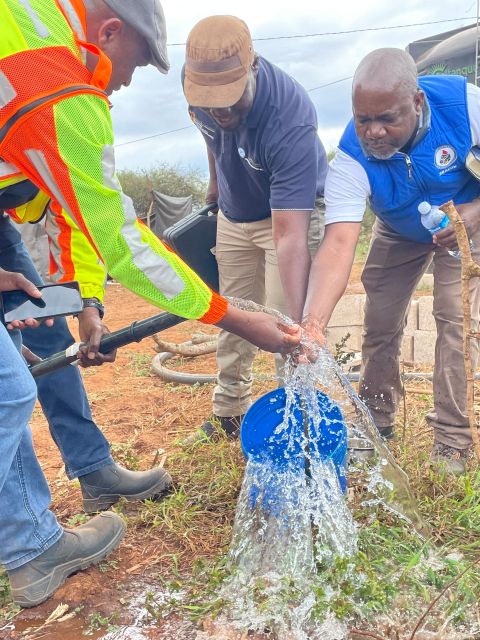
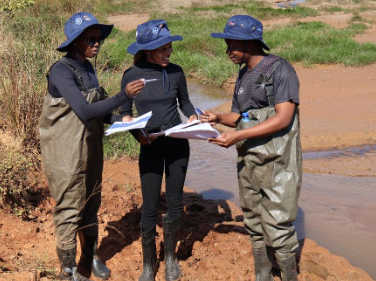
This year, INMACOM piloted the Phophonyane River Watch, a citizen science initiative designed to turn local youth into river stewards. For 16 young participants, the classroom became the riverbank. They stepped into the rushing waters of the Phophonyane River, job-shadowing scientists and learning about freshwater biomonitoring.
These initiatives are still fresh pilots, beginnings rather than final destinations. And perhaps that is exactly where their beauty lies. The future of Africa’s water crisis will not be solved by a single workshop or a lone brilliant idea. It will be built through hundreds of quiet, courageous moments like Nomagugu’s.
For organizations like INMACOM, the true metric of success is no longer a headcount of who attended a meeting. The real question is: What changed because they were there?
They represent different countries, different communities, and different lives. But they move with common aspirations. And like the rivers that weave through their homelands, their shared future flows beautifully across borders.
These initiatives have been made possible through the generous support from INMACOM and the GEF-8 Incomati and Maputo River Basins Project, implemented by UNDP Eswatini and executed by the Global Water Partnerships Southern Africa and other key partners of INMACOM.